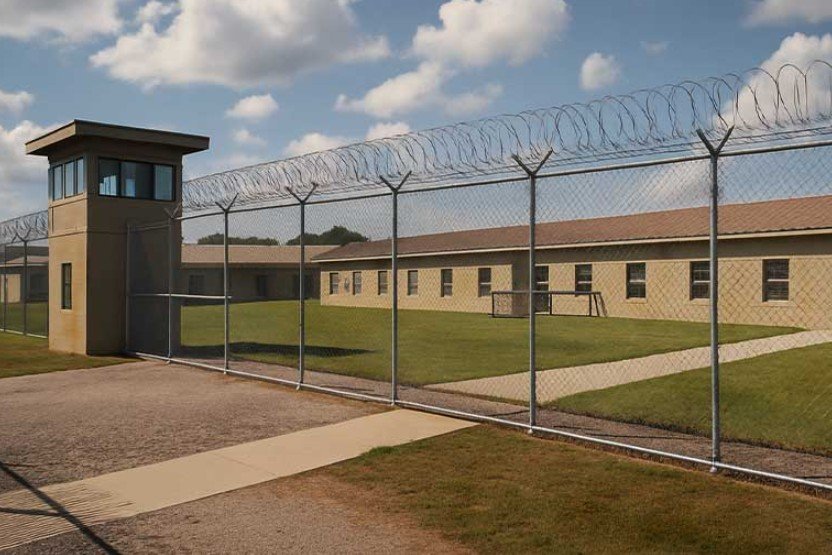
When an individual is designated to a minimum-security facility, the families left behind often enter a confusing world of specialized jargon and specific digital platforms. Understanding the administrative backbone of an institution like Herlong Federal Prison Camp, California is essential for maintaining stability during the period of incarceration.
Navigating the Designation Process
The Federal Bureau of Prisons uses a point-based classification system to determine where an inmate will serve their time. Those with low “security points”—often earned through a lack of prior violence and a short sentence length—are frequently sent to facilities like Herlong Federal Prison Camp, California. For families, this designation is often a relief, as camps typically allow for more open visiting rooms and a less volatile environment than higher-security “yards.”
However, being in the high desert of Northern California presents its own set of logistical hurdles. The distance requires families to be highly organized with their resources and communication methods.
The Economics of the Inmate Trust Fund
One of the most immediate concerns for a family is ensuring their loved one has the financial means to survive and communicate. The primary tool for this is fbop moneygram. Because inmates are not allowed to possess cash, all funds must be handled through a centralized Trust Fund account.
By using fbop moneygram, a family member can send funds that appear in the inmate’s account within hours. These funds are used for everything from purchasing over-the-counter medication to paying for minutes on the telephone. Without a consistent balance, an inmate becomes “indigent,” relying solely on the standard-issue hygiene kits and the basic prison food provided by the government.
Dietary Adjustments and the Commissary
While the facility provides three meals a day, the reality of prison food is that it is often repetitive and nutritionally basic. The “mainline” (the cafeteria) serves meals designed for mass production and long-term shelf life.
To offset the limitations of prison food, inmates use the money sent via family members to shop at the weekly commissary. Here, they can buy rice, beans, dried meats, and vegetables (when available). In a camp setting, “cooking” becomes a social activity and a way to maintain a sense of normalcy, with inmates often pooling their commissary resources to create communal meals that far exceed the quality of the standard government trays.
Digital Communication via Restricted Platforms
Communication is no longer limited to handwritten letters and expensive phone calls. The introduction of Trulincs has revolutionized how families stay in touch. Trulincs is the secure server that hosts the CorrLinks messaging system.
For a set price per minute, inmates can sit at a computer terminal to type messages to approved contacts. While trulincs does not allow for attachments, photos, or internet browsing, it provides a near-instantaneous way to share news. For many, this system is the only way to remain a “present” parent or spouse, allowing for a daily exchange of thoughts that keeps the family unit intact.
Strategy for Re-entry: The Three-Year Mark
The most successful re-entries are those that begin three years before the actual release date. The primary goal is to create a comprehensive plan to rebuild my life after federal prison camp. This isn’t just a sentimental goal; it is a logistical requirement that involves several key pillars:
- Financial Literacy: Managing the small savings from prison work details to ensure there is “gate money” upon release.
- Maintaining Professional Ties: Using trulincs to stay updated on industry trends or to communicate with former colleagues who may offer a lead on a job.
- Housing Stability: Coordinating with family or the Residential Reentry Management (RRM) office to ensure a seamless transition to a halfway house.
The Psychological Shift
To truly rebuild my life after federal prison camp, an individual must shed the “inmate” persona and re-adopt the “citizen” persona. This is difficult because the camp environment, while less intense than a penitentiary, still reinforces a lack of agency.
Families play a critical role here. By treating the incarcerated person as a consultant in family decisions—rather than just a recipient of news—they help maintain the cognitive skills necessary for a successful return.
Conclusion
The journey through the federal system is as much a burden for the family as it is for the inmate. From the moment of designation to Herlong Federal Prison Camp, California, the focus must be on maintaining the bridges to the outside world.
Whether it is through the consistent use of FBOP Moneygram to provide basic comforts, the daily check-ins via Trulincs, or the shared struggle of supplementing prison food, these actions are all part of a larger mission. That mission is to ensure that the individual has the emotional and financial foundation necessary to rebuild my life after federal prison camp and never return to the system again.

