The first time I stood next to a cylinder bore machine, I honestly thought, “How hard can this be?”
That thought didn’t age well.
I was a younger engineer back then, confident on paper but light on scars, and I learned very quickly that boring cylinders is one of those processes that looks simple until it absolutely isn’t. Over the years, working with automotive blocks, hydraulic cylinders, and industrial engine components, the cylinder bore machine became one of those tools I both respected and slightly feared. And yeah, it earned that reputation.
A cylinder bore machine, at its core, is used to enlarge, true, or finish the internal diameter of a cylinder. Sounds basic, right? But in practice, it’s all about precision, setup discipline, and understanding how metal behaves when you least expect it. If you rush it, the machine will happily expose your mistakes for everyone to see.
I remember one early job on a cast iron engine block. We were reboring worn cylinders to accept oversized pistons, about 0.50 mm over. I set up the machine, dialed in the boring bar, and thought I was golden. Halfway through, I noticed taper that shouldn’t have been there. The problem wasn’t the machine—it was me. The block wasn’t clamped evenly, and thermal expansion was ignored. Lesson learned the hard way.
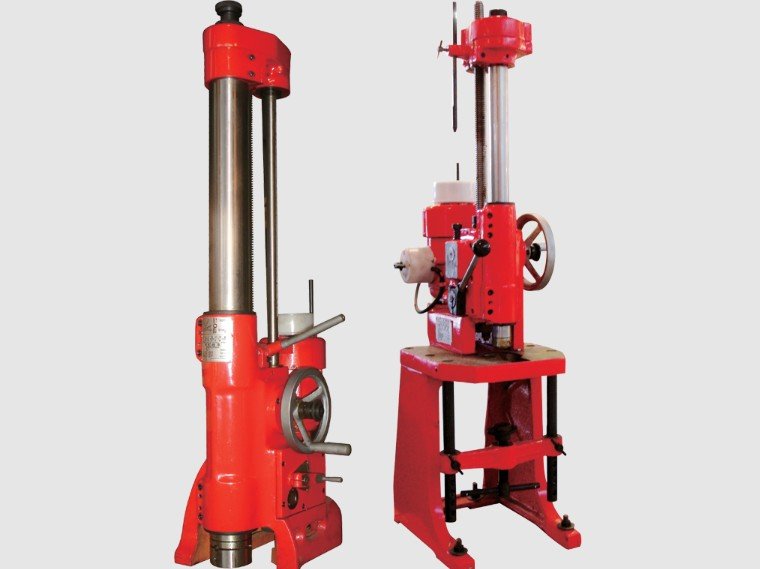
What separates a good cylinder bore machine from a mediocre one isn’t just brand or price. It’s rigidity, spindle accuracy, and how well it maintains alignment over time. Machines like vertical boring systems or portable line boring setups all have their place. I’ve used floor-mounted boring machines in engine rebuild shops and portable units in the field for hydraulic cylinders that couldn’t be removed. Both will do the job, but only if you respect their limits.
One thing I’ve learned is that setup time matters more than cutting time. I’ve seen operators spend 45 minutes boring and five minutes setting up. That’s backwards. A cylinder bore machine needs to be square to the workpiece, centered precisely, and checked with indicators. I usually aim for less than 0.01 mm runout before I even think about turning the spindle on. It feels slow, but it saves hours later.
Tooling is another area where mistakes get expensive fast. Boring bars must be sharp, properly balanced, and matched to the bore diameter. I once tried to push a dull insert “just one more bore.” Bad idea. Surface finish went downhill, chatter marks appeared, and the bore had to be honed aggressively to recover. The machine didn’t fail. The decision did.
Feed rate and spindle speed are where experience really shows. Every material behaves differently. Cast iron cuts beautifully but throws abrasive dust everywhere. Aluminum grabs if you’re not careful. Steel can chatter if the setup isn’t rigid enough. On most cylinder bore machines, slower speeds with steady feed give better straightness. Fast cuts feel productive, but precision quietly suffers.
One frustration I still feel is when people underestimate thermal effects. Boring generates heat, and heat moves metal. On long bores, especially in hydraulic cylinders, you can measure perfect size at the top and be off at the bottom once everything cools. I now let parts stabilize, take spring passes, and measure at multiple depths. That habit came from ruined parts, not textbooks.
Accuracy expectations are another thing worth talking about. For engine cylinders, roundness and straightness usually need to be within a few microns. That’s tight. A cylinder bore machine alone often gets you close, but honing is what brings it home. I don’t see boring and honing as separate processes anymore. They’re partners. Bore for geometry, hone for finish and final size.
Maintenance of the machine itself is boring—no pun intended—but critical. Dirty ways, worn spindle bearings, or sloppy feed screws will show up in your bores. I once chased a taper issue for days before realizing the boring head locking screw wasn’t holding properly. Tiny problem, big consequences. Since then, I inspect machines like I inspect parts.
If you’re choosing a cylinder bore machine, think about what you actually bore. Engine blocks need vertical rigidity and accurate depth control. Large industrial cylinders need long stroke capability and alignment systems. Portable boring machines are lifesavers in the field, but they demand patience and careful centering. There’s no “best” machine, only the right one for the job.
One small tip that made a big difference for me: always record your setups. Write down speeds, feeds, tool types, and results. I used to rely on memory. Memory lies. Notes don’t. Over time, that logbook became more valuable than any manual.
There were days when I hated that machine. Long shifts, scrapped parts, supervisors asking why tolerances were missed. But there were also days when everything clicked. The bore measured perfect, the surface finish looked clean, and the piston slid in like it belonged there. Those moments stick with you.
If you’re new to using a cylinder bore machine, don’t rush to prove how fast you are. Prove how accurate you can be. Speed comes later. Measure often, listen to the cut, and trust your indicators more than your gut. And if something feels off, stop. The machine will wait.
After all these years, I still learn something new every time I set one up. That’s the honest truth. Cylinder boring isn’t glamorous, but it’s foundational. Get it right, and everything downstream works better. Get it wrong, and no amount of clever engineering will save you.
And yeah, I still double-check my setup—because the machine never forgets when you don’t.